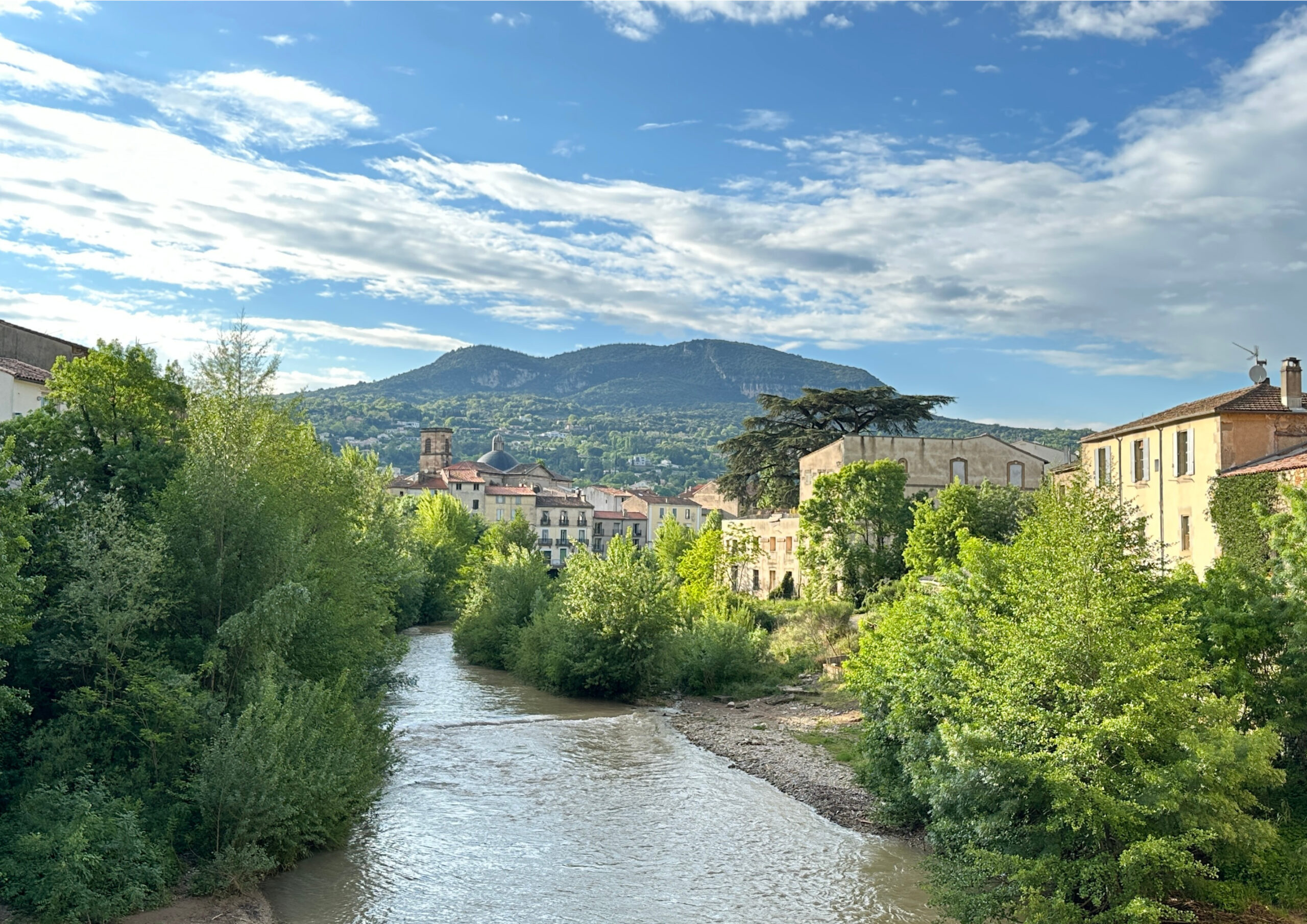
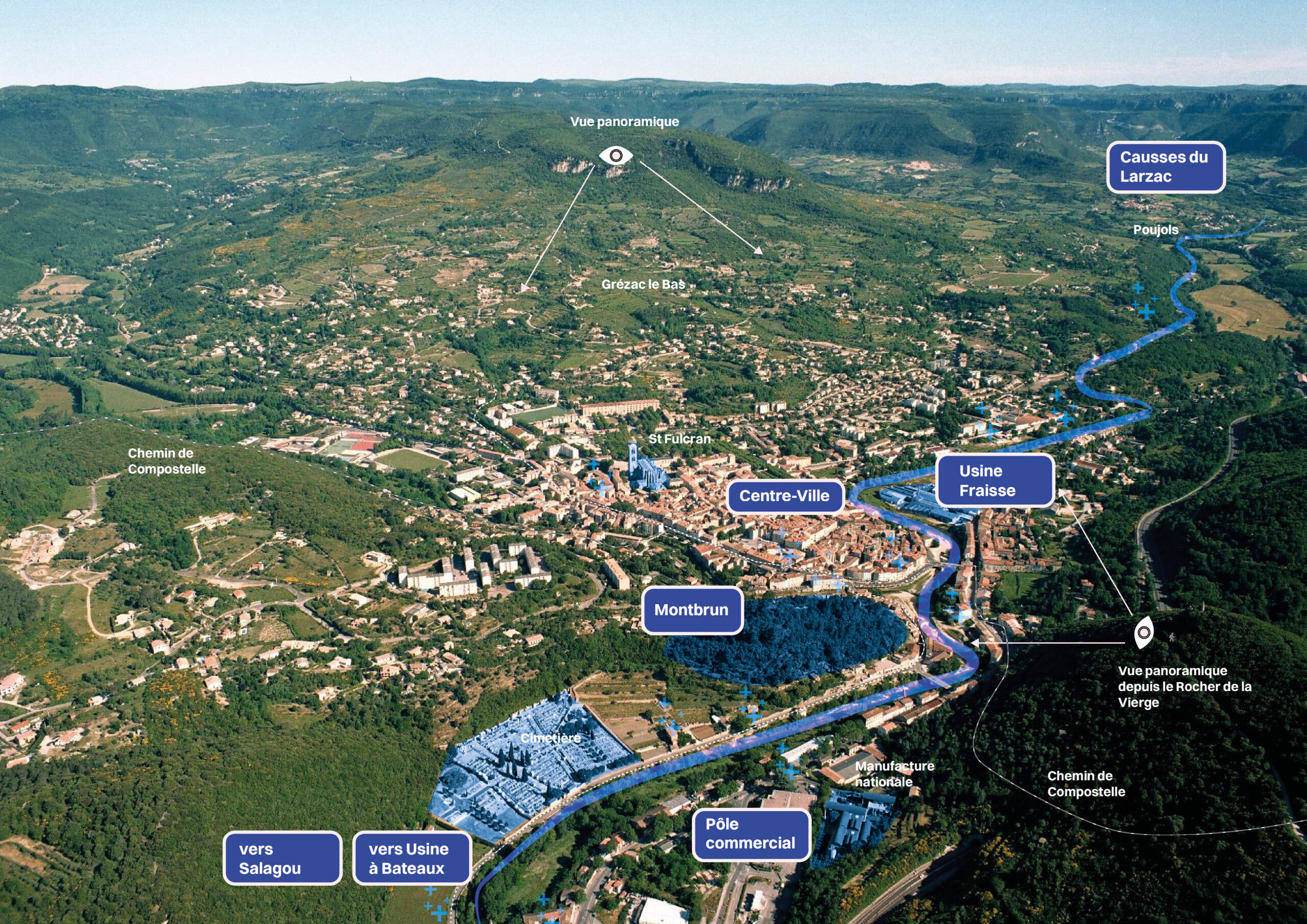
In Lodève, the Quartiers de Demain programme takes on a particular significance: the town concentrates many of today’s urban vulnerabilities—vacancy, a fragile historic fabric, an isolated priority neighbourhood, industrial brownfields, flood risks, and climate pressure. Yet Lodève also holds what many places have lost: a powerful landscape, a legible topography, a productive memory, and inhabited narratives.
The study led by Urbastudio, Nommos and Ingerop is grounded in a simple conviction: Lodève does not need a ready-made project, but a strategy that reactivates its deep-rooted resources. Here, landscape becomes the primary infrastructure: it structures mobility, regulates climate, and carries the continuities of everyday life. Turning the town back towards its rivers is a way of restoring its vital system: coolness, biodiversity, public space, and social connection.
Fieldwork, citizen workshops and sensitive explorations revealed an underestimated wealth: cool narrow streets, inner gardens, textile brownfields, workshops, mills, forgotten riverbanks. The project does not seek to add; it seeks to repair, reconnect and clarify.
At the heart of the priority neighbourhood, this approach transforms an isolated area into a fertile centre for the wider territory, where daily uses, amenities and mobilities find a new anchor.
The strategy relies on a few structuring moves: reopening and enhancing the banks of the Lergue and the Soulondres, reactivating brownfields, recomposing public spaces, calming traffic, and adapting housing.
It places at its core a strong notion: the right to the river—a shared commons between inhabitants, nature and the town, across its floods, its moods, its uses and its festivities.
In Lodève, frugality is not a renunciation; it is a political choice. The town is rebuilt from its real strengths—its landscape, its productive history, its people. The project positions Lodève as a national laboratory, able to show how vulnerability can become capacity, and how to “make the city differently” in a time of climate transitions.